That small shift when you bite down is hard to ignore. One day the bridge felt solid, and now you hear a click, feel a wobble, or sense something has given way. Assuming the worst is understandable, because implants were supposed to be the permanent fix.
The odds are better than you think. When an implant bridge feels loose, the problem is usually in the hardware above the implant, not the implant itself. At Gordon Dental Implants and Cosmetics in Leawood, Dr. Philip J. Gordon spends much of his practice on corrective implant work, and identifying what has actually failed is the first step in any broken or failing dental implant case.
What makes a bridge on implants start wobbling?
Most of the time, a screw or connector above the implant has worked loose, not the implant itself. Infection or lost bone bonding can also cause movement, so an exam and a scan are needed to tell the two apart. Avoid chewing on that side until it is looked at.
What “Loose” Usually Means With an Implant Supported Bridge
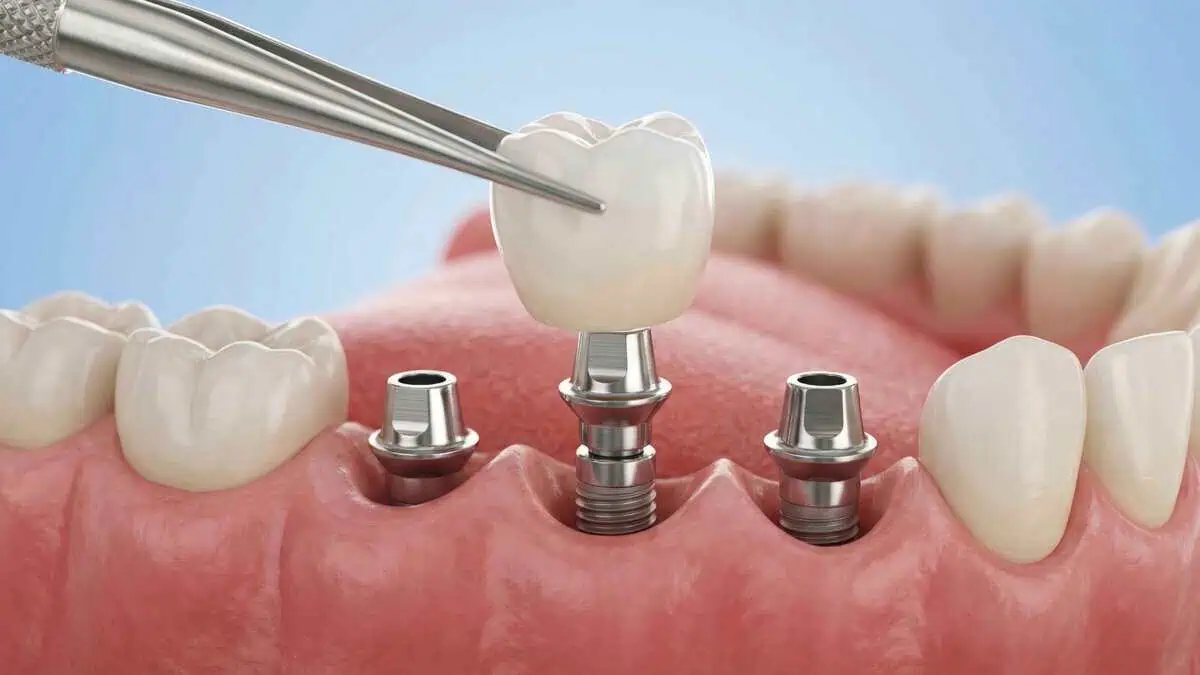
A loose feeling almost always traces back to one component. Your bridge is a stack of parts: implant bodies anchored in the jawbone, abutments that connect to them, screws holding everything together, and the bridge itself on top. Any one of those can work loose while the rest stay solid.
Screw loosening is the most frequently reported technical complication in implant-supported restorations, and it happens well above the bone. So two very different situations can look like the same symptom. Prosthetic problems sit above the gumline. Implant problems involve the bone. They feel nearly identical but are treated very differently.
Prosthetic Problems: When the Hardware Above the Implant Is the Issue
Prosthetic problems are more common and easier to fix than implant-supported bridge problems. The implants stay integrated, and the repair happens above them.
- A loose abutment or prosthetic screw, which lets the bridge rock or click while the anchors underneath stay firm
- Cement failure on a cement-retained bridge, which allows it to lift or shift during chewing
- A fractured screw or worn abutment, where the connection no longer holds the tension it was torqued to
- Framework misfit, a cantilever, or an uneven bite that keeps stressing the same connection
A screw that keeps backing out is usually telling you something about how force moves through your bite.
Broken and Failing Dental Implants: When the Anchor in the Bone Is the Issue
Implant-level problems involve the bone holding the implant, and they need faster attention. Peri-implantitis is the most common. It is an infection in the tissue around the implant that inflames the gums and gradually erodes the supporting bone. Bone loss from other causes can do the same.
Failed osseointegration is the other category. Osseointegration is the fusion between the implant and jawbone that provides stability, and an implant that never fully bonds, or loses that bond, will move as a unit. Implant fracture is less common and usually follows years of overload or significant bone loss.
Why You Should Stop Chewing on It and Call
Every time a loose implant restoration moves, it grinds against something. Repeated movement wears the screw, the abutment, the implant’s internal threads, and the surrounding soft tissue. A loose screw can fracture inside the implant body, turning a short appointment into a much more involved retrieval.
Testing the wobble to see if it’s still there causes the same damage, so leave it alone and chew on the other side. The FDA advises telling your dental provider right away if an implant feels loose or painful.
How a Dentist Finds the Real Cause
Finding the cause takes imaging and hands. A 3D CT scan and X-rays show bone levels around each implant and can reveal a fractured screw sitting inside the implant body. We often have to remove the bridge so we can test each implant for movement on its own, because a splinted bridge hides which anchor is the real problem. We also check the bite, since uneven force often causes a repair to come loose a second time.
For patients in Kansas City coming in with broken or failing implants, Gordon Dental includes a complimentary 3D CT scan at the consultation.
What Repair Looks Like Once the Cause Is Clear
Prosthetic Repairs
Most cases resolve above the implant. That can mean retorquing the screw, replacing a damaged screw or abutment, recementing, or remaking a section of the bridge. A bite adjustment often accompanies the repair so the same connection doesn’t fight the same force again.
Treating Infection and Bone Loss
We often manage early infection with deep cleaning around the implant and antibiotics. When support has already been lost, rebuilding the bone around the implant may be staged before placing a new restoration.
Implant Removal and Replacement
We remove an implant that has lost integration or fractured, and the site heals before we plan a replacement. The rebuild corrects design, dimensions, and bite alignment, which matters especially with zirconia bridges that are unforgiving of misfit.
Common Questions About a Loose Implant Bridge
Can I tighten it at home?
No. The screws are torqued to a manufacturer specification with a calibrated wrench, and overtightening can shear the screw inside the implant.
Does a loose bridge always mean the implant failed?
No. A loose dental implant bridge more often means a prosthetic component has come loose.
How long does a repair take?
A screw or cement issue can sometimes be handled in one visit. Infection, grafting, or replacement runs longer and is staged over months.
Can the bridge be saved if one implant failed?
Sometimes, depending on how many implants support it and where the failed one sits.
What to Do About a Bridge That Has Started to Move
A loose implant-supported bridge is most often a hardware problem with a simple repair, and far less often a sign that an implant has failed in the bone. You cannot tell which from your own chair at home, and the two paths lead to very different outcomes. One may be a single visit. The other may involve treating an infection, rebuilding bone, or replacing the implant entirely.
What you can do is stop loading it and get it imaged while the problem is still small. Broken and failing dental implants rarely resolve on their own, and a bridge that has started to move will keep wearing on the parts holding it. Schedule a consultation to have your loose implant-supported bridge evaluated and determine the right treatment.
About the Author
Dr. Gordon earned his DDS from the University of Missouri-Kansas City School of Dentistry and practices at Gordon Dental Implants and Cosmetics in Leawood, Kansas, where implant and corrective implant dentistry make up much of his caseload. He is a member of the American Dental Association, the Academy of General Dentistry, the American Academy of Implant Dentistry, and the International Congress of Oral Implantologists. He also hosts the Dental Implant Practices podcast and teaches other general dentists on implant diagnosis, placement, and grafting.
Serving patients from Leawood, Overland Park, Prairie Village, and across State Line Road in Kansas City, Missouri.
Medically reviewed by Philip J. Gordon, DDS, on October 29, 2026